

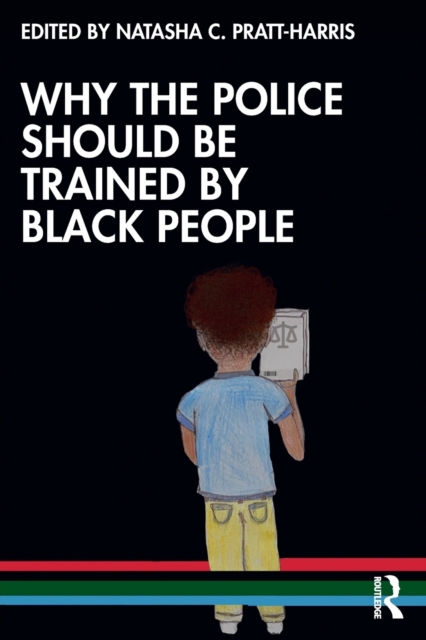
Why The Police Should Be Trained By Black People
Kshs 0.00
Kshs Loading...
Why the Police Should be Trained by Black People aligns scholarly and community efforts to address how Black people are policed. It combines traditional models commonly taught in policing courses with new approaches to teaching and training about law enforcement in the U.S., all from a Black lens. Black law‑enforcement professionals (seasoned and retired), scholars, community members, victims, and others make up the contributors to this training textbook written from the perspective of the Black experience. Each chapter describes policing based on the experience of being Black in the United States, with concern for the lives and life chances of Black people.
With five sections, readers will be able to:
– Describe the history and theory of law enforcement, policing, and society in Black communities
– Critically address how law enforcement and the nature of police work intertwine with race‑based societal and governmental norms and within law‑enforcement administration and management
– Understand the variation in pedagogy, recruitment, selection, and training that has impacted the experience of police officers, including Black police officers, and Black people in the U.S.
– Explore the role of law enforcement as crime‑control and crime‑prevention agents as it relates to policing in Black communities and for Black people
– Address issues related to race and use of force, misconduct, the law, and ethics/values
– Assess research, contemporary issues, and the future of law enforcement and policing, especially as it relates to policing of Black people
Why the Police Should be Trained by Black People brings pedagogical and scholarly responsibility for policing in Black communities to life, revealing that police‑involved violence, community violence, and lived experiences do not exist in a vacuum. Written with students in mind, it is essential reading for those enrolled in policing courses—including criminology, criminal justice, sociology, or social work—as well as for those undertaking police‑academy and in‑service police training.
Buy WHY THE POLICE SHOULD BE TRAINED BY BLACK PEOPLE and more Books Online in Nairobi, Kenya at your doorstep and download our Android App or iOS App to get a discount.
Format: Paperback / softback 294 pages, 5 Tables, black and white; 7 Line drawings, black and white; 3 Halftones, black and white
Classifications: USA, Black & Asian studies, Police & security services, Crime & criminology
ISBN : 9780367684136
Out of stock
Delivery Information
We strive to ensure all orders are processed and delivered promptly.
- Order Processing: Orders are processed within 1–2 business days upon confirmation of order & payment.
- Delivery Timeline: Standard delivery typically takes 1–3 business days, depending on your location and courier availability.
- Shipment Updates: Once your order is dispatched, our sales agent shall contact you regarding the progress of your delivery.
- Delays: While we aim to deliver on time, unforeseen delays may occur due to customs clearance, courier challenges, or external factors. We will keep you updated should any delays arise.
Returns & Exchanges
We value your satisfaction and aim to make returns as smooth as possible.
- Eligibility: Items may be returned within 7 days of delivery, provided they are unused, in original packaging, and accompanied by proof of purchase.
- Non‑Returnable Items: Certain items such as story books / novels, offer / clearance products, personalized orders cannot be returned.
- Return Approval: All return requests must be reviewed and approved by our team before the item is sent back.
- Return Shipping: Return shipping costs are the responsibility of the customer unless the item received was damaged, defective, or incorrect.
- Refunds: Approved refunds will be processed within 5–7 business days after the returned item is inspected. Refunds are issued through the original payment method.
- Exchanges: If you wish to exchange an item, please contact us to confirm availability via our official EYS WhatsApp / call on +254 726 522 108.